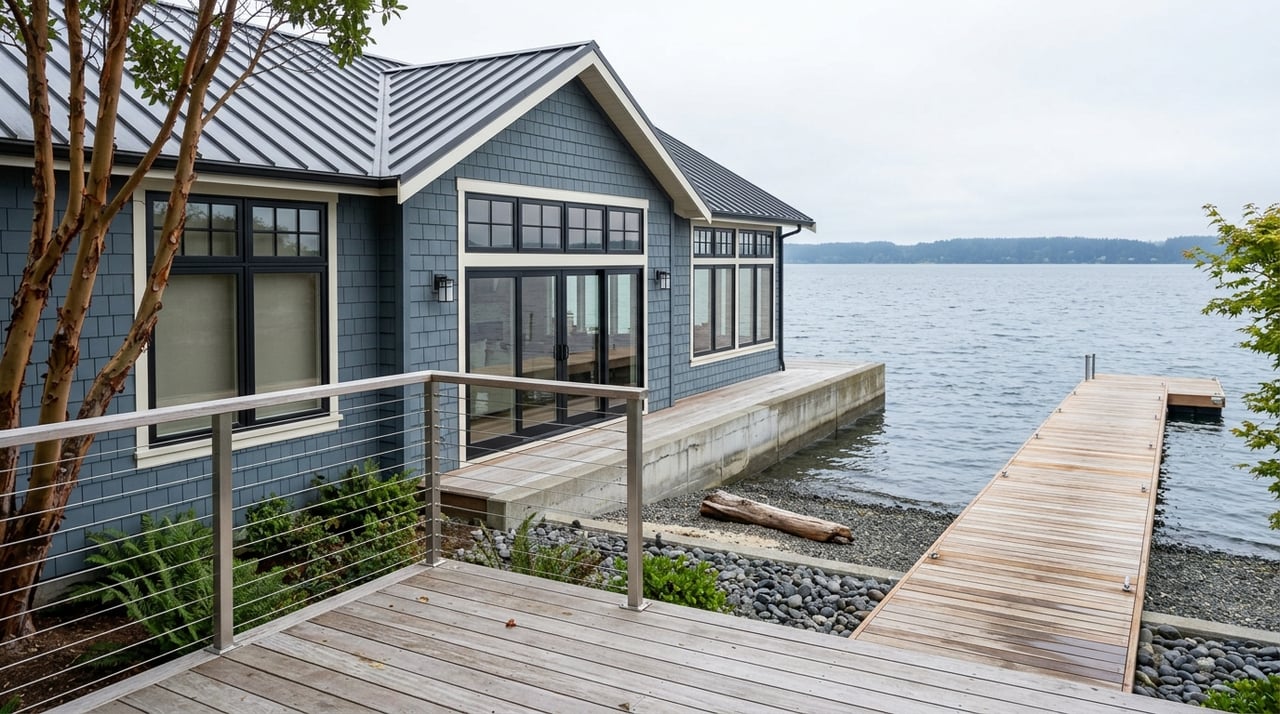
Are you dreaming about waking up to harbor views and ending your day near the water? Waterfront living in Gig Harbor can feel special in a very everyday way, but it also comes with real planning questions. If you are weighing the lifestyle against the practical tradeoffs, this guide will help you understand what daily life can look like and what to think through before you buy. Let’s dive in.
Waterfront life feels active
Gig Harbor’s waterfront is not just scenic. It is part of how the city functions and how many people spend their time. The city describes the area as historic and active, with parks, boutiques, dining, and shoreline access woven into daily life.
That matters if you want a home where the water is part of your routine instead of something you only visit on weekends. In Gig Harbor, the shoreline blends residential living with boating, marine services, restaurants, retail, and a long-standing working waterfront identity.
Public shoreline access is part of daily life
Ancich Waterfront Park offers beach access, a paddlers dock, boat storage, and a view plaza. Skansie Brothers Park adds shoreline views, restrooms, a pavilion, and seasonal events like summer concerts and the Maritime Gig Festival.
For you as a buyer, this means waterfront living can include both private enjoyment and shared public spaces nearby. Even if you do not own direct shoreline, the city’s waterfront amenities can still shape your lifestyle in a meaningful way.
It is a working waterfront too
Gig Harbor Bay is not planned only for homes and recreation. The city’s shoreline framework identifies a Historic Working Waterfront environment, which reflects a mix of commercial fishing, boating, marine activity, residential uses, and public access.
That can be a plus if you love authentic maritime character. It also means the shoreline may feel more active and functional than a purely resort-style waterfront setting.
The weather is mild but damp
Gig Harbor has a marine climate, which usually means comfortable summers and cool, wetter winters. City statistics note about 37 inches of annual rainfall, with December as the wettest month and July as the driest.
Summer temperatures generally range from about 65 to 80 degrees. Winter temperatures are often around 35 to 50 degrees, so you are typically dealing with damp and chilly conditions rather than severe cold.
Seasonal living changes your routine
During drier summer months, decks, patios, parks, and waterfront walks can become part of your daily rhythm. In winter, the same setting may feel quieter and more weather-driven, especially if wind, rain, and shorter daylight hours affect how often you use outdoor spaces.
That does not make waterfront living less appealing. It simply means you should picture the home in every season, not only on a bright summer day.
Long-term shoreline exposure matters
Washington Ecology notes that sea level rise is already a coastal planning issue, with risks that include coastal flooding and saltwater contamination in wetlands and aquifers. If you are buying on or near the shoreline, long-term exposure should be part of your decision-making.
This is one reason waterfront purchases benefit from careful research and steady guidance. A beautiful setting can still call for practical questions about location, improvements, and long-term stewardship.
Boating and tides shape the experience
If you are drawn to waterfront living for paddling, boating, or simply being close to the water, local conditions matter. One especially important detail is the Narrows channel, where WSDOT says tides can move at more than 8.5 miles per hour four times a day.
For boaters and paddlers, that can affect timing and planning. Even if you are not heading out on the water often, the natural movement of the shoreline is part of what makes this area feel distinctly maritime.
Water access may look different by property
The city’s shoreline planning recognizes residential moorage features such as piers, docks, floats, lifts, and buoys. It also supports pedestrian beach access structures and water-oriented recreation.
That does not mean every waterfront property has the same access or the same improvement options. If direct water use is high on your list, it is worth evaluating each property carefully instead of assuming one waterfront label means the same thing everywhere.
Commuting is one of the biggest tradeoffs
For many buyers, the biggest practical question is not the view. It is the drive. Gig Harbor connects to Tacoma by the SR 16 Tacoma Narrows Bridge, and bridge tolls are collected only for trips headed to Tacoma.
As reported by WSDOT, a two-axle vehicle currently pays $4.50 with Good To Go!, $5.50 at the toll booth, or $6.50 by mail. The toll is fixed regardless of travel time, so this is a regular cost to factor in if you commute eastbound often.
Timing matters as much as distance
WSDOT’s SR 16 congestion study found that some westbound segments between the Tacoma Narrows Bridge and Purdy operate at lower service levels during the afternoon commute. In plain terms, your drive can be shaped by peak traffic patterns as much as by mileage.
If you work outside Gig Harbor, it helps to test the route at the times you would actually travel. A home that feels close on a map may feel different during a weekday commute.
Transit options do exist
Pierce Transit Route 100 serves Gig Harbor and connects near places such as TCC Transit Center, Kimball Drive Park & Ride, Narrows Park & Ride, and Purdy Park & Ride. Route 101 provides seasonal service between the historic downtown waterfront and Uptown, and Pierce Transit Runner offers daily on-demand service in Gig Harbor from 7 a.m. to 10 p.m.
If you want flexibility beyond driving, these options can be helpful. They may not replace every car trip, but they do add another layer of convenience for some households.
Shoreline rules can affect your plans
One of the most important waterfront tradeoffs is that owning near the shoreline often comes with more review and planning than owning inland. Washington’s Shoreline Management Act applies to marine shorelines and to shorelands extending 200 feet landward, while local Shoreline Master Programs guide public and private uses in those areas.
In Gig Harbor, the shoreline plan supports water-oriented uses, single-family residences, open space, recreation, and view preservation. It also aims to protect public enjoyment and reduce risks tied to erosion, landslides, and shoreline harm.
Improvements may take more process
If you are wondering whether you can add a dock or make shoreline changes, the answer is usually property-specific. Ecology notes that residential docks can trigger shoreline substantial-development review above the current $28,000 threshold, and local review may also involve conditional use or variance permits.
Even smaller changes may still need to fit local shoreline code. That is why it is smart to think about your future plans early, especially if you are buying a home because of what you hope to build or modify later.
Views are part of the planning framework
In view-oriented areas, scenic character is not treated as an afterthought. The city’s parks and open-space policy says city code protects existing trees, guides landscaping in new development, and helps preserve the scenic character that defines the community.
For you, that can be both a benefit and a limitation. It may help protect the broader setting that makes Gig Harbor appealing, while also shaping what changes are possible over time.
Who waterfront living fits best
Waterfront living in Gig Harbor often works best for buyers who want the water to influence their everyday life. You may value harbor access, maritime character, and a home environment that feels tied to the outdoors and the seasons.
At the same time, this lifestyle tends to fit best when you are comfortable balancing beauty with logistics. Bridge tolls, commute timing, weather exposure, shoreline rules, and property-specific access details are all part of the picture.
A smart buying approach starts with clarity
Before you buy, it helps to define what waterfront means to you. That could mean direct shoreline, a dock or moorage setup, walkable access to downtown, or simply a view-oriented home near the harbor.
Once you know your priorities, it becomes much easier to sort the tradeoffs. Some buyers want maximum water access, while others are happier with a lower-maintenance home that still captures the setting and lifestyle.
Waterfront living in Gig Harbor can be incredibly rewarding when your expectations match the reality of the property and the area. If you want calm, informed guidance as you compare waterfront, view, and near-water options, Kate Diaz can help you move forward with confidence.
FAQs
What is daily waterfront life like in Gig Harbor?
- Daily life often includes easy access to shoreline parks, harbor views, boating culture, seasonal events, and a downtown waterfront that blends residential, retail, dining, and marine activity.
What are the main tradeoffs of living on the waterfront in Gig Harbor?
- The biggest tradeoffs often include bridge tolls when driving to Tacoma, peak commute traffic on SR 16, wet winter weather, long-term shoreline exposure, and added review for some property improvements.
How much is the Tacoma Narrows Bridge toll for Gig Harbor drivers?
- According to WSDOT, eastbound trips to Tacoma currently cost $4.50 with Good To Go!, $5.50 at the toll booth, or $6.50 by mail for a two-axle vehicle.
Can you add a dock to a Gig Harbor waterfront property?
- It depends on the property, the type of project, and whether the work falls under shoreline permit review or local shoreline code requirements.
Are there public waterfront spaces in Gig Harbor if you do not own shoreline?
- Yes. Places like Ancich Waterfront Park and Skansie Brothers Park offer shoreline-facing amenities, public access, and ways to enjoy the waterfront even if your home is not directly on the water.
Does waterfront living in Gig Harbor work for commuters?
- It can, but you should weigh toll costs, bridge access, and rush-hour timing carefully, especially if you travel regularly between Gig Harbor and Tacoma.